

Where comments appear
Each comment is anchored to a passage in the document. A small indicator sits next to the anchored text; clicking it (or clicking the comment in the outline pane) expands the thread inline. The thread shows every message in order — the agent’s original comment, your replies, any subsequent agent messages.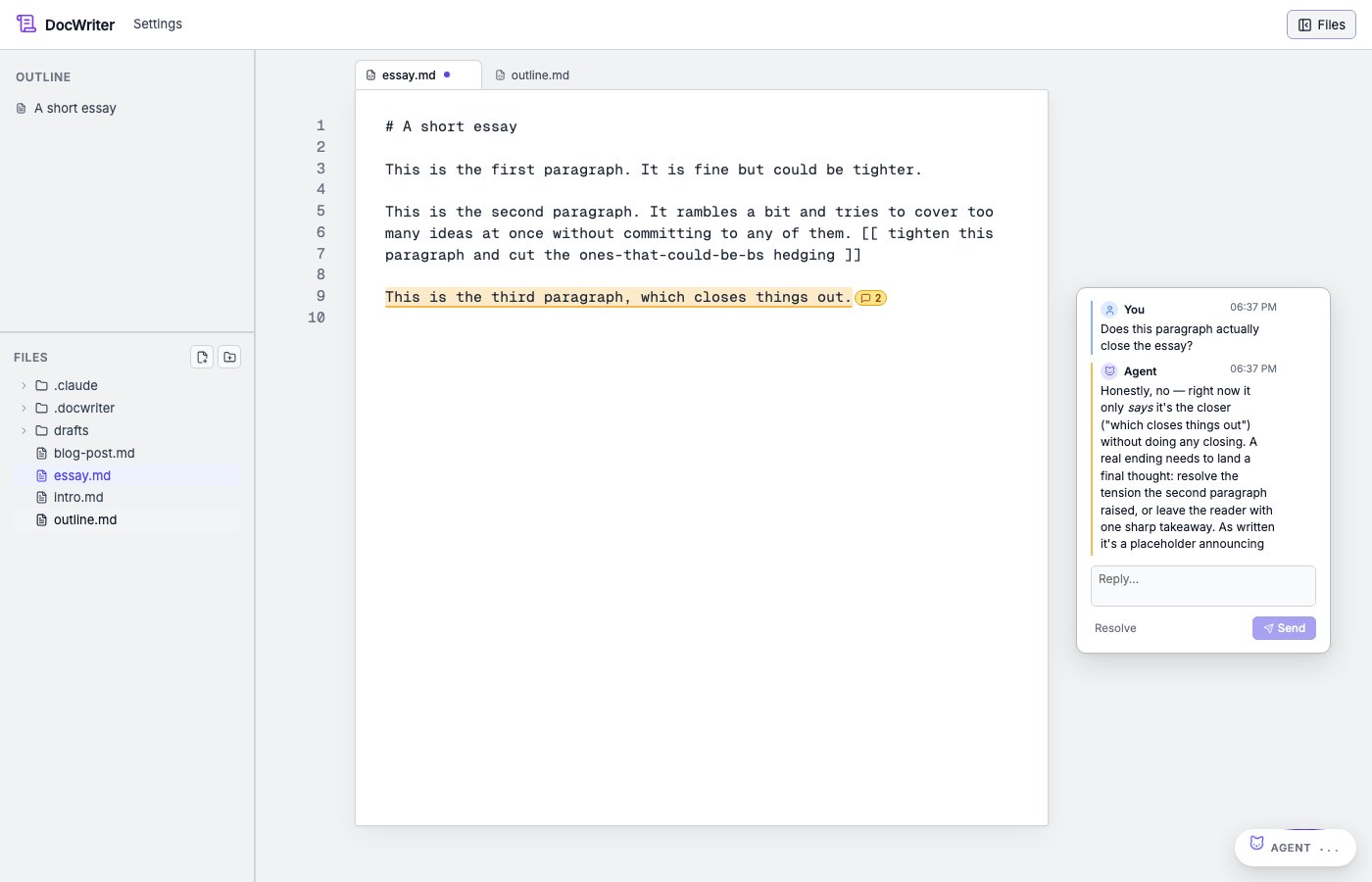
.docwriter/docwriter.db, not in
your tab files).
When you run a critique pass,
the reviewer leaves each finding as a comment on the relevant passage.
You see the reviewer’s name, mascot, and color on the comment. You can
reply to or resolve the comment like any other thread.
What you can do with a thread
Reply by typing in the thread input and submitting. The reply becomes another message in the conversation, and the agent picks it up on the next turn. Approve & propose edit. When the agent’s comment carries a proposed edit (the SDK’sproposed_edit field on post_comment), the
thread shows an “Approve & propose edit” button. Clicking it tells
the agent to apply the suggested change as an actual edit_doc on the
next turn — the comment becomes a pending review you can accept or
reject like any other edit.
Resolve the thread when you’re done with it. Resolved threads
collapse out of the way but stay in the database; you can reopen
them later.
When the anchored text changes
You can edit a passage without losing its comment thread. When you type inside the passage, you see the highlighted range expand. The highlighted range is unchanged when you edit text elsewhere. When you remove the passage, e.g. by accepting an agent edit that rewrites it, you no longer see the thread card in the margin. The thread is still saved. If you undo the edit, you see the passage and the card again. If you later type the same words elsewhere, the hidden card is not shown again. A thread is attached to one passage rather than to every copy of the same text, so you do not see old feedback on unrelated text.When you’d cause a comment instead of an edit
A comment thread is created when:- The agent decides. During an auto-wake or chat-popover turn, the agent reads the open files and chooses to comment when its feedback doesn’t translate to a concrete edit — a question, a maybe, an observation that needs your input. The autonomy level biases this choice (conservative is more comment-happy; aggressive prefers to just make the edit).
- You give feedback on a passage. When you use the feedback popup, you start a thread on the selected passage. The agent responds on the thread. With Plan first on, the agent explains its reasoning before it proposes an edit.
- The agent proposes an edit. Before the agent proposes an edit, it starts a thread. The agent explains what it will change, and you can read the explanation next to the edit in the margin.
- You run a critique pass. The reviewer reads the active file and leaves up to six findings. When a small change can fix a problem, the reviewer may propose an edit on the same thread.